Advancing UV and Chemical Resistance in Geomembranes: New Standards and Solutions
Jeff Xu – New Business Development Manager | Syensqo
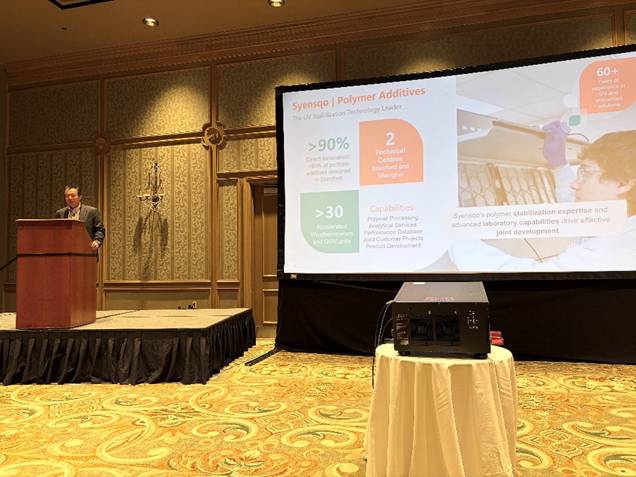
High-density polyethylene geomembranes paly a vital role in water management, erosion control, the safe containment of hazardous and municipal wastes, as well as in demanding mining environments where chemical resistance and long-term durability are essential. With the introduction of new industry standard GRI-GM42 and increasingly stringent environmental regulations, the need for advanced UV stabilization technologies has become more critical. This presentation will discuss the challenges posed by evolving standards and highlight the new performance specifications of specialty stabilizers in meeting these requirements.
Iomomer for Decking Appliations
Jong-Young Lee — Senior Research Scientist | Dow Inc.
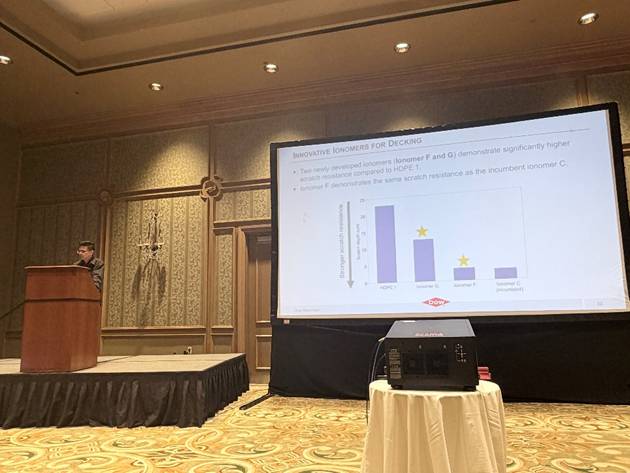
Ionomer offers high stiffness, robust scratch resistance, and outstanding oil resistance, attributed to its unique chemistry and molecular morphology. These properties make it an ideal choice for use in the capstock layer of decking materials. Beyond these physical advantages, the ultraviolet stability of the resin is crucial for capstock performance, especially given prolonged exposure to sunlight in outdoor environments. This study presents our testing results of the UV stability of various ionomers, their blends with high density PE and different UV additives. Our findings demonstrate that a specific paring of ionomer product and UV additives are required to achieve a balanced performance of scratch resistance, UV stability, and oil resistance. The results highlight the importance of tailored formulations of the capstock to optimize long-term performance in decking applications.
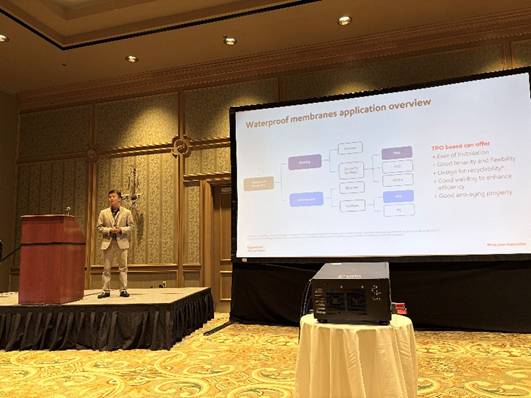
Rethink what’s possible in TPO membrane performance
Zhifeng Bai — Polymer Scientist | ExxonMobil
Thermoplastic polyolefin (TPO) waterproof membranes are the fastest growing roofing application due to their cost-effectiveness (easier installation and lower maintenance), energy efficiency, and durability. Propylene elastomers have been commercially adopted in the TPO roofing market since 2015, because they offer customizable performance and innovation, cost/performance optimization, supply reliability and diversity, and durability. This presentation introduces a new propylene elastomer, Vistamaxx™ Tough T1600, with improved polymer properties that translate into TPO roofing membrane attributes. The new grade can enable improved processing (e.g., profile control) and performance (e.g., aging properties and membrane flexibility) relative to current market materials used in TPO roofing membranes.
Advances in Moisture Curable Flame-Retardant Polyethylene Systems for Wire and Cable Applications
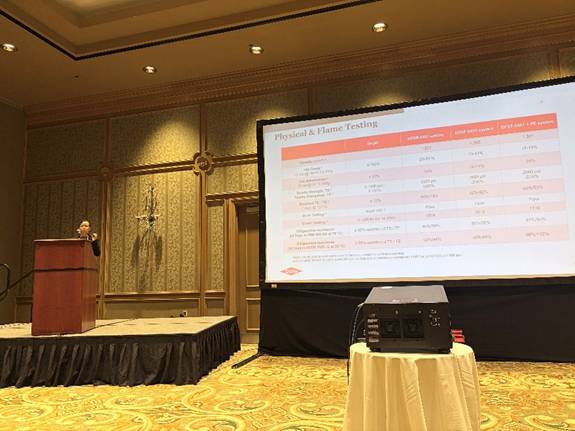
Wenwen Li — Research scientist | Dow Chemical
Moisture-curable compositions comprising silane-functionalized polyethylenes and a selection of additional functional ingredients (such as catalysts and flame retardants), typically supplied as masterbatches, are widely utilized in the manufacture of polyolefin layers set around metallic electrical conductors for low- and medium-voltage power cable applications. This presentation highlights recent advancements made in the arena of moisture-curable flame-retardant polyethylene systems formulated with ethylene-silane copolymers as silane-functionalized polyethylenes for these applications, featuring: 1) rapid curing rate and/or greater crosslink ability at ambient temperature and humidity, even in the presence of high filler content and other polymers; 2) outstanding extrusion processability yielding superior surface quality; and 3) excellent flame-retardant performance. The mechanical, physical and electrical properties of the wires and cables meet industry standards for horizontal burn, vertical burn and photovoltaic applications.
Advancing the Circular Use of Thin-Film Polyethylene in Asphalt Binder Modification
Chris Wacinski — CTO/Founder | Driven Pastics
Roxanne Jenkins, PhD — Technical Service and Development Scientist | DOW
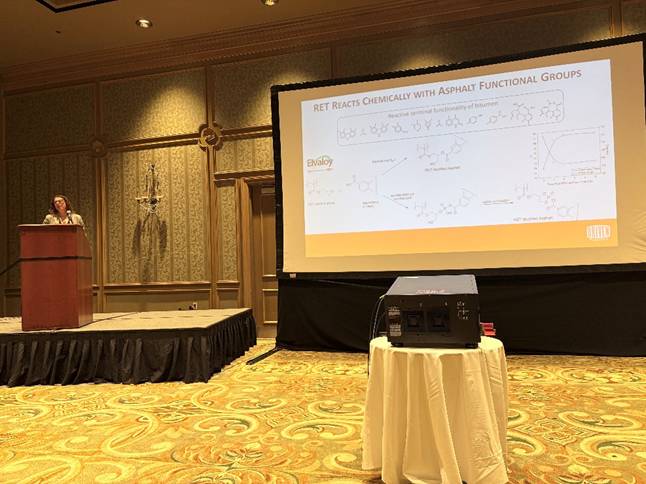
This work presents a scalable hybrid wet/dry polymer-modification process that enables the incorporation of recycled thin-film polyethylene (rPE) into flexible asphalt pavements using traditional polymer-modified asphalt (PMA) and hot-mix asphalt (HMA) production equipment. The approach allows seamless integration within existing infrastructure and low-temperature blending conditions, creating an immediately adoptable solution for sustainable road construction. It targets one of the most challenging polyolefin waste streams—thin films moderately contaminated by organics, dirt, colorants, or labels—that are typically excluded from traditional recycling due to quality and handling constraints. Through controlled reactive compatibilization using ELVALOY™ Reactive Elastomeric Terpolymer (RET) from Dow, rPE is uniformly dispersed within the asphalt matrix without high-shear milling or specialized equipment, lowering both energy demand and production cost compared to SBS-based systems. Comprehensive quality control (QC) and sourcing protocols ensure batch-to-batch consistency and traceability. The Siloam Road project (Pueblo County, Colorado) incorporated 0.5 wt% rPE—13.5 tons of thin-film polyethylene—resulting in improved rutting resistance, enhanced cracking performance, and excellent constructability. Building on this success, the 2025 Medal of Honor asphalt infrastructure project scaled the process to 82 tons of rPE, representing the largest thin-film asphalt application in Colorado to date. The system’s flexibility in accepting moderately contaminated feedstock has created a new outlet for “waste-of-the-waste” plastics, providing value to regional manufacturers, recyclers, and municipalities. Ongoing work includes life-cycle cost assessment (LCCA), and process simulation to quantify performance and optimize full-wet design scalability.